

Have you ever wondered if you are doing enough in terms of vulva and vagina care and hygiene? A lot of women wonder about the do’s and don’ts when it comes to keeping their vulva or vagina “clean”. This sometimes leads to overcleaning and doing too much which can actually be harmful to the natural environment ‘down there’.
The vagina is self-cleaning and doesn’t need to be cleaned, rinsed, washed or douched internally. There is no need to wash or scrub inside your vagina. The vulva on the other hand needs some maintenance, but that doesn’t mean it is supposed to smell like a bouquet of flowers. There is a natural and normal odour to the vulva and vagina but many women are self-conscious and think that the normal odour “stinks”. There are some instances where a foul-smelling odour might be due to an underlying issue and if it is accompanied with discharge of strange colour and odour in that case it will be wise to consult with your doctor. Women approaching menopause, in menopause or who struggle with Genitourinary syndrome of menopause might need to provide extra care to the vulva as there are changes in hormones affecting the pelvic floor muscles, glands and skin of the vulva which can lead to sensitivity or pain, dryness and atrophy.
Let’s recap on anatomy to ensure you know the difference between the vulva(external, labia) and the vagina(entrance and internal).
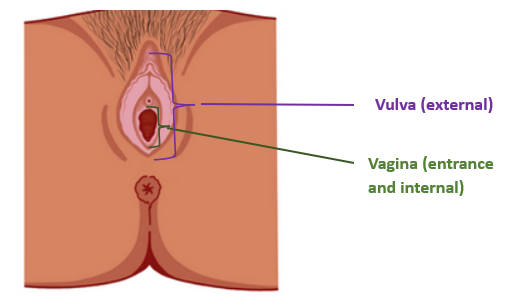
How to care for and clean your vulva:
Do not use soap, water is sufficient, but if you feel the need to wash with a product rather use an unscented cleanser (like facial cleanser Cetaphil). Soap can be damaging to the different layers on the skin of the vulva meant to protect it. It can also affect the normal pH level. The normal pH level of vulva skin is 4.0-5.2 and soap can raise the pH. Soap can have a drying effect on the vulva, and this is not ideal especially for women in menopause. Some women like to use wet wipes when cleaning their vulva, it is hygienically unnecessary and can easily cause irritation in the skin and lead to dermatitis. Rather avoid using wipes, but if you need to because you don’t have access to water- use water wipes that are unscented and doesn’t contain soap. If you are someone who prefers to wipe with something when cleaning- use toilet paper with water.
If you struggle with urinary incontinence and leaking- use the correct incontinence pad and not panty liners or menstrual pads. These are not made to hold enough fluid and this will lead to the pad getting wet and soaked quickly which can cause skin irritation. Make it a habit to change any pad often.
If you struggle with dryness of the vulva, try using petroleum jelly to moisturize which is cost effective. But only apply to the vulva externally, not internally in the vagina. There are other more expensive vulva moisturisers available but be careful and take a look at the ingredients. It should be unscented and shouldn’t cause any irritation. If you are struggling with vaginal dryness, especially during menopause, there are more specific moisturisers you can get at the pharmacy to use in the vagina, but consult with your gynaecologist first. Vaginal Moisturizers can be a combination of water-based (glycerine is a common ingredient and must be 8.3% or less), silicone, oil and hyaluronic acid-based.
Pubic hair or no pubic hair? It’s better to leave some pubic hair remaining. Removing pubic hair completely, especially with waxing, can lead to damage to the top layer of skin and increased fragility of the vulva skin. Pubic hair helps to protect the vulva against friction and keeps the area humid by trapping moisture against the vulva. It also helps to keep dirt away from the skin barrier. Having no, some, or a lot of pubic hair is a personal choice, but more pubic hair does not indicate to being dirty or unhygienic at all.
Lubricants:
It is actually very important to put some thought and research into the lube you are buying. Lube can be used for various reasons: to assist with intercourse when you struggle with dryness or pain, or simply to use it as an addition to your sex life for extra “spice” and fun- it is the most underrated sex toy. Never use scented, fragranced, flavoured or warming lube! The 2 types of safe lubricant to use inside and outside of the vagina are: water-based and silicone-based lube. The Pjur brand (“Pjur women body glide”(silicone) and “Pjur women Nude”(water)) is generally a good and safe brand to go with. Please never settle for the cheapest option, remember it is an investment in your comfort and enjoyment.
Water-based lube: it is best to choose one where the pH is close to vaginal pH 3.5-4.5, the wrong choice can be irritating. The next thing to look at in water-based lube is the osmolality. Vaginal secretions’ osmolality is 260-280mOsm/kg. It is best to use a water-based lube with an osmolality less than 380mOsm/kg. When the osmolality is higher in lube than in the vaginal secretions it will lead to the lube drawing water out of the vaginal tissues which can lead to irritation or even increase the risk of getting an STI if exposed. Look out for preservatives in the ingredients of the lube. Lubricant containing more than 8.3% glycerine, containing chlorhexidine gluconate, petroleum oils and polyquaternium should be avoided. These preservatives can lead to tissue irritation and disturbances in the vaginal ecosystem. Water-based lube is safe to use with condoms and sex-toys. It does dry out a bit faster than silicone-based lube, but is widely available, more affordable and feels most like the natural lubricant of the body.
Silicone-based lube: Silicone-based lube is hypoallergenic because there is no need for preservatives. It also lasts longer on the skin (doesn’t dry out) than water-based lube and makes a great addition to use in the bath or shower. Silicone-based lube is overall preferred by women who struggle with genitourinary syndrome of menopause. It is also a good place to start if you haven’t used any lube before or if you haven’t used lube in a very long time. Watch out for silicone-based lubes containing coconut oil or VitE. These oils are not good to use inside the vagina and might not be compatible with condoms. Silicone lube is sometimes harder to clean out of sheets and might also not be compatible with all silicone sex toys. So, confirm the safety and compatibility of the lube you are using with the supplier of the sex toy.
I will mention that there are oil-based lubricants available too, but they have to be made of plant-based oils in order for them to be safe to use internally. They are not compatible with latex condoms and are not suitable for people who struggle with thrush.
From now on make sure you apply the correct techniques for vulva care or when shopping for lube. It is a very specific ecosystem “down there” and any disturbance can alter this. Keep your vulva and vagina happy!
