

The “Closed Cannister”:
The closed cannister (aka your Core) consists of the diaphragm on top, deep abdominal muscles in front, deep back muscles at the back and ultimately the pelvic floor muscles on the bottom. This cannister is part of your abdomen. The diaphragm is at the bottom of the ribcage and is shaped like a dome.
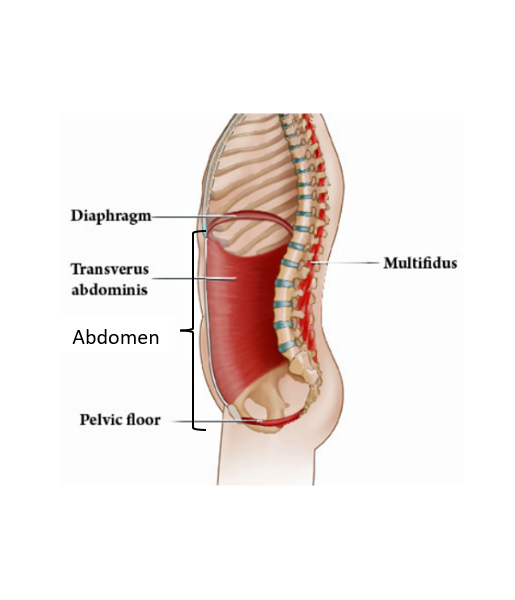
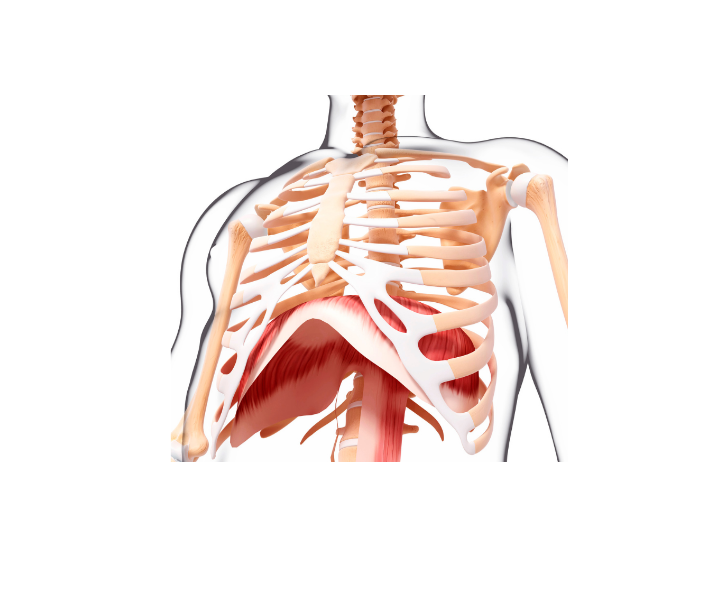
What if I told you that breathing is not just about lungs expanding to move air in and out? Let’s start at the basics. Go and dig through the archives in your memory and try to remember what you were taught at school about how breathing works: When we breath in the ribcage expands and the diaphragm moves down and flattens out to accommodate air entry into the lungs. As we inhale pressure is created in our abdomen as the diaphragm flattens out- thus the reason for our tummy moving outwards or expanding slightly. During inhalation our tummy pushes slightly out and our lower chest expands. This is called diaphragmatic breathing. So ideally when we breath we should have a relaxed tummy and not be “tucking in” or “sucking in” our tummy. When we breath out the diaphragm relaxes and moves back up into its dome shape as air moves out of the lungs, our tummy relaxes back to resting position. We should mostly be in a relaxed state of breathing and use our major breathing muscle, the diaphragm, to breath. When we are exerting ourselves, we use accessory breathing muscles together with the diaphragm to allow extra air into the lungs – these are at the top of the rib cage and also attached to the neck.
Now, relax and inhale (always breath through your nose) and feel how your diaphragm (lower chest) and tummy expands, you should not be experiencing a lot of upper chest movement as you are in a relaxed state.
Coming back to the “closed cannister”: This is a closed pressure system, meaning that when one side moves inwards the other side needs to move outward or relax to make sure there is proper flow of pressure. Think of a balloon. When blowing into a balloon, the sides need to be able to expand to allow air to enter. The abdomen and pelvic floor is connected, therefore the pelvic floor can be affected if all the parts of the cannister don’t move as they should to allow pressure distribution. Just imagine trying to blow up an inflatable pool lilo while someone is seated on one end, that end would not expand properly because the air (pressure) can’t move freely into that space as it should. For example: pull in your tummy and focus on the feeling you get in your pelvic floor muscles (see previous blog about where your pelvic floor is https://meetyourpelvicfloor.co.za/find-your-pelvic-floor/). Do you feel that movement in your pelvic floor, the contraction? This way you can feel how different parts of the cannister, in this case tummy (core) and pelvic floor, are connected. Now try to breath while you have your tummy “sucked in”, feel how the different parts of “the cannister” struggle to move freely as they should? An imbalance in the movement of the cannister walls often leads to pelvic floor dysfunction. Pelvic floor physiotherapy can help with this. Therefore, always make sure you are breathing diaphragmatically (belly out and lower chest expanding) and NOT keeping your tummy “sucked” in. This is something that most women unfortunately pick up at a young age in order for them to look more appealing and it is sent through from generation to generation. It starts from observing a person close to them or from social media and its unrealistic expectations.
Now that we have covered the diaphragm, tummy, and understand the pressure system, let’s find out how the pelvic floor ‘moves’ while breathing. When you understand this, you will be able to better contract and relax your pelvic floor muscles.
The link between the diaphragm and the pelvic floor:
During inhalation the diaphragm flattens and moves down, the pelvic floor also descends as pressure is distributed. The pelvic floor in this case has to RELAX in order for it to move outwards to allow proper pressure distribution. During exhalation (breathing out) the diaphragm moves back up into its dome shape while the pelvic floor also ascends as pressure is moved out of the cannister. The pelvic floor CONTRACTS and moves inwards when we breath air out. This allows for optimal distribution of pressure.
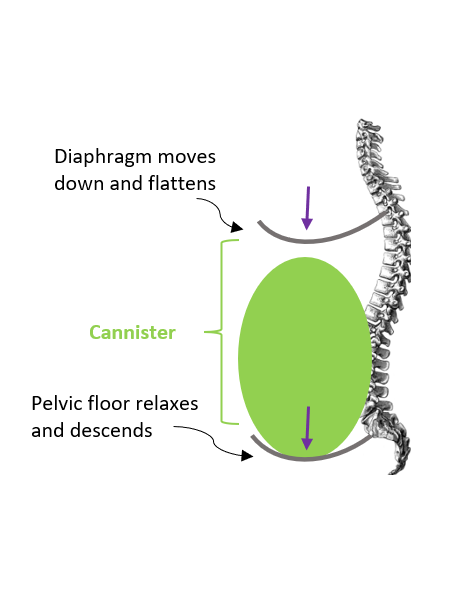
Inhalation
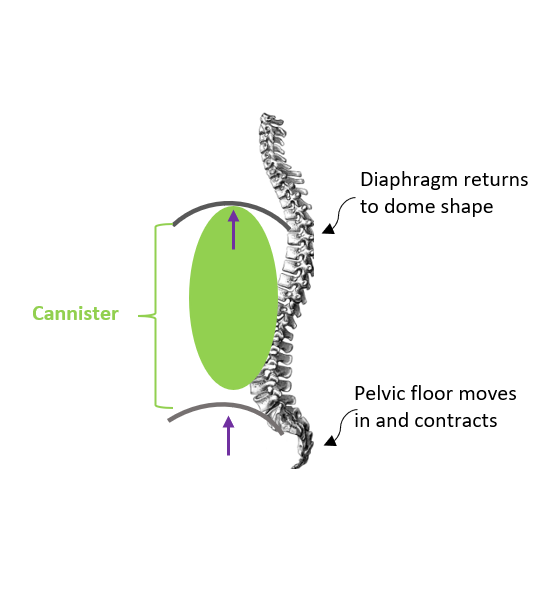
Exhalation
Practice it (put your hand on your tummy if it helps you to feel the movement):
- Breathe in: Diaphragm moves down (flattens), lower chest expands, tummy pushes out AND pelvic floor moves down and out (relaxes). Imagine the cannister is now a blown up balloon.
- Breathe out: Diaphragm relaxes back into dome shape, tummy moves back to neutral AND pelvic floor moves up and in (contracts). Imagine the cannister is now a flat and empty balloon.
When you have diaphragmatic breathing under control you will be able to train your pelvic floor muscles by doing the following (remember to keep your tummy relaxed):
- Breathe in – relax and drop pelvic floor. Think to yourself: ”Open vagina, open anus”. You should feel a gentle downward pressure.
- Breathe out – squeeze and lift pelvic floor. Think to yourself: “Close vagina, close anus”. You should feel a gentle upward pull/lift.
And you thought breathing was as simple as air entering your lungs? The convenient thing about pelvic floor training is that no-one knows you are doing it 😊 which means you can to it anywhere by simply focusing on breathing correctly. More tips on how to get your pelvic floor muscles to contract and relax to follow. Happy practicing!!!
