

To Kegel or not to Kegel?
You might have heard of kegel exercises, AKA “kegels”, and might have some idea of where your pelvic floor muscles are if you have attempted kegels before. Kegels are exercises believed to “tighten” the pelvic floor, it is also a way to strengthen pelvic floor muscles – when done correctly. The general idea of kegels is to focus on “squeezing” the pelvic floor muscles.
Some women have never heard of anything relating to kegels or the pelvic floor and sadly many of these women are not aware that some of the problems they are experiencing are related to the pelvic floor and they either never get help or they receive the wrong treatment. The unawareness of the pelvic floor is also sometimes as a result of poor sexual education or the subject of sex being taboo in many conservative households and genitals being referred to as “private parts” instead of using the correct terminology. This causes conditioning in the brain relating to the ‘area’ being private in all regards – never to be spoken of, examined, thought of or explored.
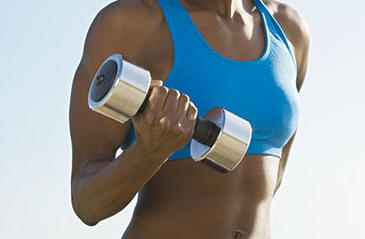
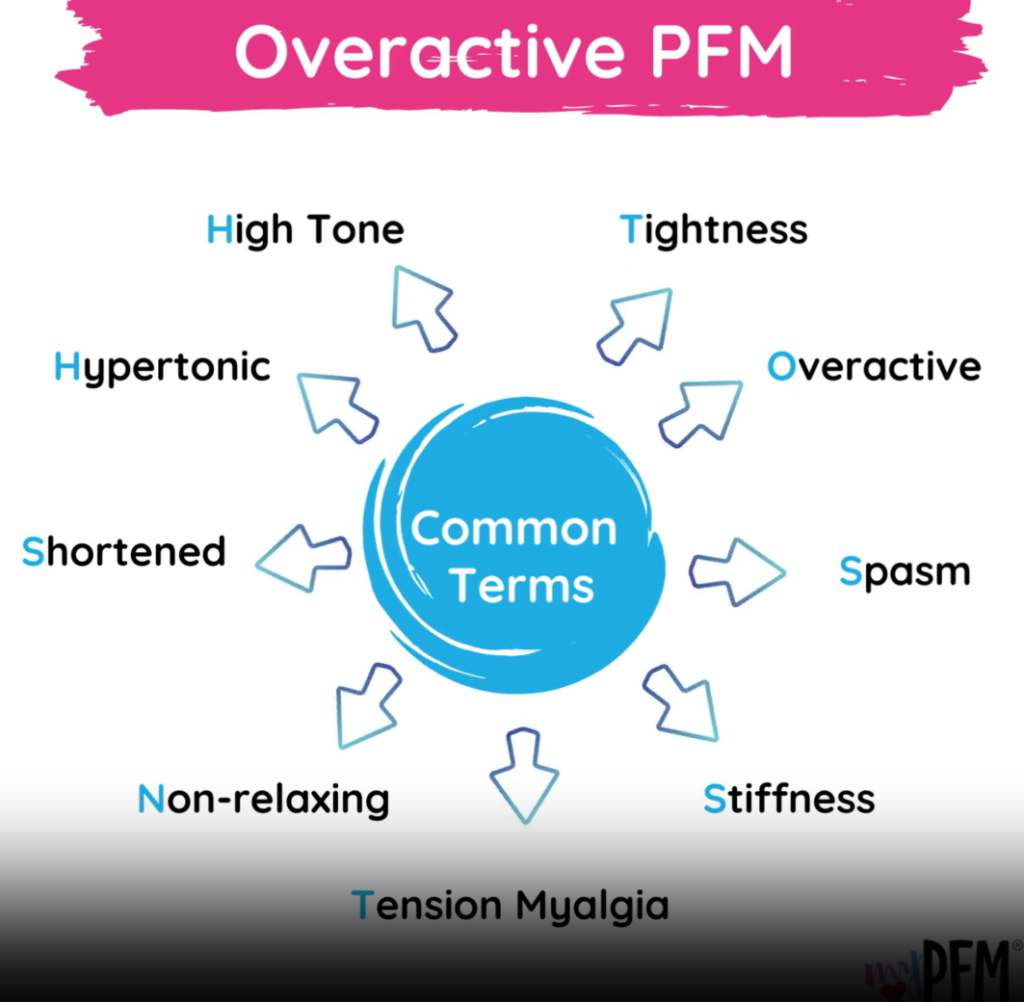
Then, there are many women who are told or believe that doing kegel exercises are a necessity after having children to help “tighten” the vaginal walls or to prevent leaking urine and some are told to especially focus on kegels prior to giving birth. But “tightening” the pelvic floor muscles is not the answer. There is a misconception that tight=strong. Whereas tight can actually mean dysfunctional, weak or overworked/overactive. Most women who have a pelvic floor muscle disorder find it hard to activate the pelvic floor muscles in the right way. Proper instruction is needed to prevent them from contracting the wrong muscles in the pelvic area which are not part of the pelvic floor. When the pelvic floor muscles are too tight it is likely due to being overworked/overactive, tense, weak or fatigued and this can cause pain. If your pelvic floor is already overly activated/overworked you are likely to make yourself worse by doing kegels, in this case learning to let go and relax the pelvic floor muscles is will be more beneficial. So, by over-doing kegel exercises, doing them the wrong way and for the wrong reasons might lead to more damage/other problems in the pelvic floor. The popular belief that this will contribute to more pleasurable intercourse for you or your partner is therefore false. Many times women think they are training their pelvic floor muscles by doing kegels- but what they are actually doing is bracing/pushing out their stomach, holding their breath, squeezing their buttocks and doing uncoordinated squeezes of the pelvic floor (mainly squeezing the anus). This may cause the pelvic floor muscles to be overworked (not strong) and not allowing them to properly move through their whole available range of motion, consequently never relaxing properly. Being able to relax the pelvic floor muscles is also very important! This would be like you doing a bicep curl but never extending your elbow (straightening your arm) completely before or after flexing.
We want to avoid speaking of these exercises as “kegels” in order to stay away from the “squeezing and tightening” idea that goes with it. We want to rather strengthen, or sometimes relax, and not necessarily “tighten” the pelvic floor muscles. A tight muscle is not a functional muscle and the idea is to have functional pelvic floor muscles. This is done by doing specific and appropriate pelvic floor muscle training. This will differ from woman to woman and depends on the symptoms she has and the condition her pelvic floor muscles are in. It is very important to establish whether the symptoms are related to TOO MUCH or TOO LITTLE contraction of the pelvic floor.
Pelvic floor muscle training consists of:
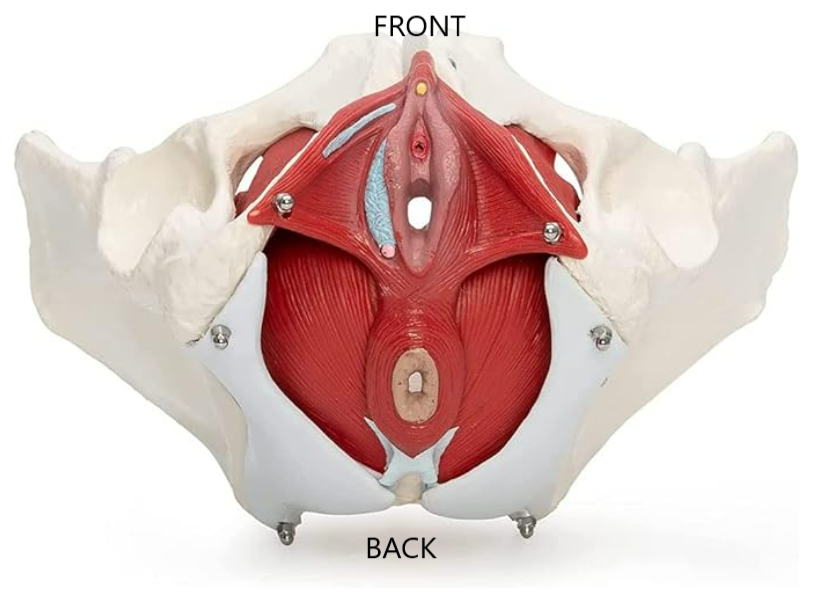
- Knowing where your pelvic floor is.
- Being aware of what contraction and what relaxation of the pelvic floor muscles feel like.
- Being aware of the difference between pelvic floor muscle contraction more to the front(vagina) vs more to the back(anus).
- Being able to breath while doing pelvic floor muscle training, never holding your breath.
- Never pushing out your stomach to contract the pelvic floor.
- Never needing to use extra muscles such as abdominal muscles, buttocks, inner thighs or even facial muscles.
- Pelvic floor muscle contraction should not be painful.
- A Pelvic floor muscle contraction should not feel like something is bulging or pushing down.
- Fully contracting and relaxing pelvic floor muscles, working through the whole available range.
How to tell if your pelvic floor might be too “tight” or overactive:
Please consult with a pelvic floor physiotherapist if you are struggling with any of these symptoms. You do not need to live like this, this is not “a normal part of life” and there are treatment options available.
*Constipation, the need to strain during bowel movements, a sensation of incomplete bowel evacuation/emptying, hemorrhoids, pain with bowel movements, rectal pain.
*Pain or difficulty with and during intercourse, pain after intercourse, painful orgasms, pain and difficulty when inserting a tampon.
*Tailbone pain, vaginal or vulva pain, chronic burning or recurrent feelings of infections with tests coming back negative for infection, pain around lower back, hips and pelvis that doesn’t resolve through stretching and exercise.
Here are some tips to help with pelvic floor muscle training:
During Pelvic floor muscle contraction:
- You should feel a lift and a GENTLE squeeze.
- You should NOT feel something pushing down
During Pelvic floor muscle relaxation
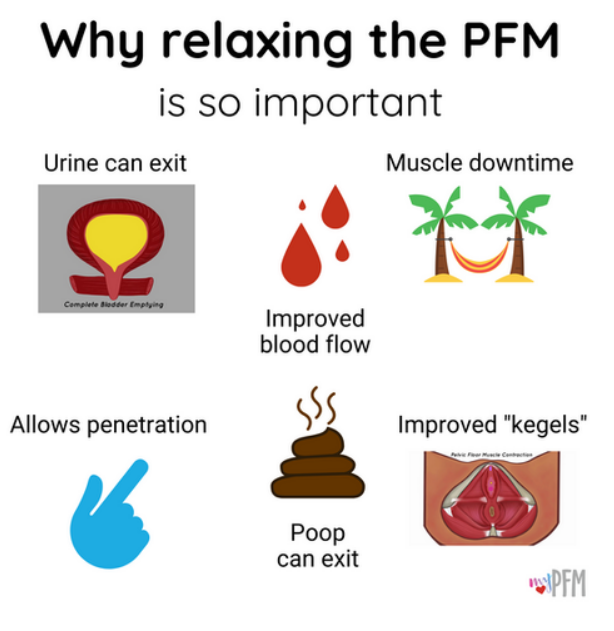
- It is important to relax your pelvic floor muscles completely after each contraction.
- You should feel a soft downward movement and a feeling of the pelvic floor letting go.
- Use your breath to help (see previous Blog: The link between the diaphragm and the pelvic floor)
TIPS FOR CONTRACTING YOUR PELVIC FLOOR MUSCLES:
Think “close vagina, close anus”
Hold and lift
Imagine picking and pulling a berry up with your anus or vagina
Nod your clitoris
Try to hold a fart
Imagine closing your vaginal walls around your tampon
TIPS FOR RELAXING YOUR PELVIC FLOOR MUSCLES:
Imagine your pelvic floor softening in a hot bath
Imagine your pelvic floor opening like a flower
Imagine your pelvic floor is melting and letting go
It should feel like you are gently trying to start urinating or letting go of a fart
Relax your tummy muscles
Another way to “feel” your pelvic floor muscles contract and relax: Feel the area between your anus and vagina – this is called the perineum. When you relax your pelvic floor, you should feel a gentle downwards movement of the perineum into your fingers and when you contract your pelvic floor you should feel a contraction and the perineum lifting away from your fingers. OR you can also insert a clean finger into your vagina and feel the vaginal wall closing around your finger for a contraction and softening of the vaginal walls with relaxation-almost pushing your finger out.
So, there it is, kegels myth busted. Go out and enlighten your friend, sister, mother or grandmother- let’s ENCOURAGE, EDUCATE and EMPOWER! Keep an eye out for more blogs about pelvic floor health.
